Balance. Different Types of Equilibrium
Abstract
Balance is the theme of WAVe 2026, the international architecture workshops organised by the Università Iuav di Venezia.
WAVe offers an intensive educational model based on collaborative work, bringing together students and lecturers from international schools of architecture. Through a series of design workshops, participants are invited to explore innovative forms of coexistence, construction techniques, spatial imaginaries, and architectural structures and devices capable of stabilising and reconfiguring the conditions of reality.
This year’s theme reflects a desire to promote experimental approaches aimed at exploring different forms of contemporary balance through architectural design. Balance is understood here as a dynamic quality that permeates the entire design process and represents the meeting point between opposing forces: stability and change, memory and innovation, the natural and the artificial, permanence and transformation, structure and void. Architecture seeks this balance not as a static state, but as a continuous process, open to temporary conditions. In a fragmented and unstable world, the project becomes an act of synthesis and moderation, capable of restoring coherence and meaning to the contemporary landscape.
WAVe 2026 will explore the theme of balance, taking current scenarios of precariousness as its starting point. Participants will be asked to develop theories and projects capable of organising forms and spaces of collaboration within frameworks of adaptive coexistence and mutual support, conceived as systems capable of transforming internal tensions into structural and spatial resources.
The pursuit of balance takes the form of a combinatory action that integrates technical skills and humanistic knowledge. Architecture is called upon to absorb and mediate the discontinuities generated by human influence on space, acting as a device that is both reparative and organisational within the contemporary habitat. The architect is invited to conceive of architecture as a relational system, capable of building common ground and reorganising balances within specific contexts.
This edition of WAVe fosters international cooperation between universities and builds a shared cultural platform where students and faculty engage in dialogue within the Venetian framework.
Balance aims to consolidate a network of cooperation capable of generating, through the work of researchers and students, a diversity of visions, methods and design approaches. These contributions will be geared towards reconfiguring unresolved spaces and conditions of inequality present in the contemporary city, using architectural knowledge as a tool for transformation.
Theory takes on a central role as a forward-looking tool, capable of reorganising thought and guiding design action. Through theoretical reflection and experimentation, WAVe 2026 invites participants to imagine architectural devices capable of making the most of limited resources, rebalancing spatial and social disharmonies, and contributing to processes of repair, reorganisation and rediscovery of places in equilibrium.
Michel Carlana, Simone Gobbo
Wave 2026 Scientific Coordinators
Atelier
Università Iuav di Venezia, Terese: room 1.3 aula danza, Badoer: room A
Monica Centanni, Mario Farina, Maria Teresa Sambin, Stefano Tomassini
Balance. Bodies, Ruins, Derives
6 – 17 July 2026
6 CFU (Type D / F)
With contributions from Daniela Angelucci, Lucia Amara, Maddalena Bassani, Roberto Balzani, Marco Bertozzi, Giacomo Calandra di Roccolino, Massimo Capulli, Francesco Careri, Alessandro De Cesaris, Fernanda De Maio, Sara Di Resta, Maria Grazia Eccheli, Isabella Friso, Ilaria Grippa, Fantina Madricardo, Elisabetta Pallottino, Christian Toson, Cristina Kristal Rizzo
Balance. Bodies, Ruins, Drifts is a seminar and workshop programme that intertwines philosophy, performing arts, architecture, archaeology, image theory, and urban practices around a shared question: how can we think equilibrium when the present appears marked by fractures, catastrophes, and irreversible transformations?
Rather than indicating a stable condition, “balance” is here understood as an unstable tension between body and space, memory and destruction, gesture and ruin, the visible and the invisible. The days of study and workshop unfold as an traversal of material and symbolic landscapes in which the relationship between the human, the environment, and history appears in continuously fractured and recomposed forms.
The first research nucleus takes shape around the case of Nemi, a site where myth, archaeology, architecture, and engineering are exemplarily intertwined. The waters of the volcanic lake, the ancient cult, the submerged imperial ships later recovered, the museum built to house them, and their eventual destruction during the war form a stratified archive of images and ruins. Through contributions by archaeologists, architects, film scholars, and cultural historians, Nemi will be investigated as a paradigmatic figure of a landscape in which nature and artifice, memory and catastrophe coexist in a permanent tension.
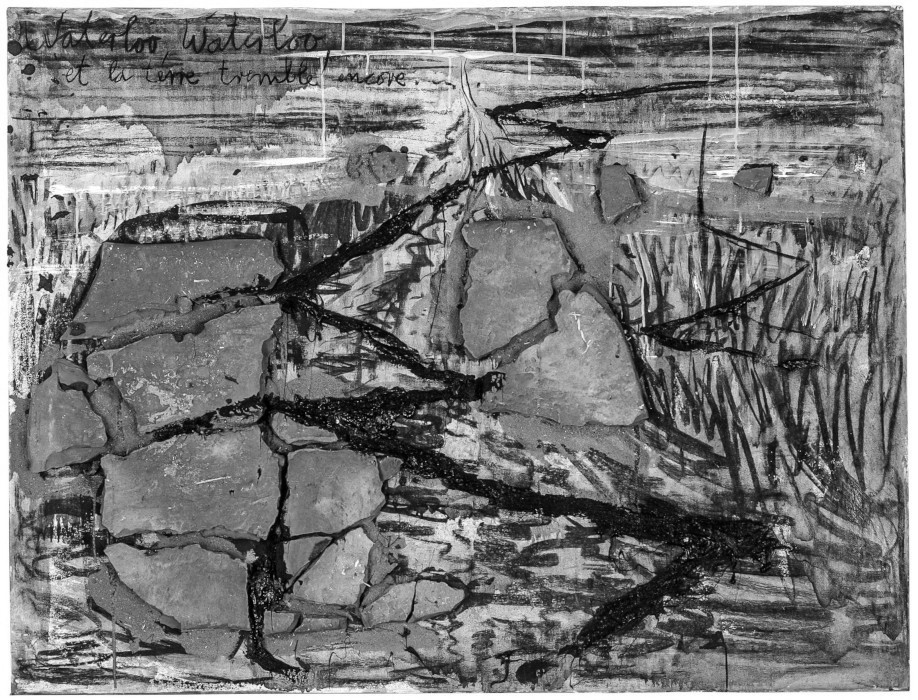
This attention to forms of fragmentation continues in the seminar dedicated to Antonin Artaud’s Cahiers, where the body emerges as a site exceeding any stable definition: a confined, fragmented body, traversed by writings, drawings, stains, postures, and gestures that continuously destabilise the relationship between language and matter. Here too, the meaning of balance does not coincide with harmony or composition, but with an extreme search for equilibrium within the instability of body and word.
The programme also opens to a reflection on contemporary artistic and design practices: from architecture read through the female genealogy of creative and professional labour, to choreographic, performative, and urban experimentations. The workshops investigate sleep (its images, its postures) as an unprecedented nocturnal balance, a space of darkness as both gift and hope; the relationship between body and architectural representation; the imagery of contemporary catastrophe and its narration; and Situationist drifts through the Venetian space following the traces of Guy Debord and Ralph Rumney.
Through collective readings, urban traversals, montage practices, and performative devices, space is conceived not as a simple container, but as a field of affective, political, and symbolic tensions.
Rather than a traditional disciplinary cycle, Balance thus configures itself as a transdisciplinary platform of research and experimentation. Philosophers, artists, architects, archaeologists, performers, and students are invited to engage with what, in contemporary images, bodies, and landscapes, continues to escape full representation: historical wounds, material ruins, submerged memories, collective atmospheres, environmental and political catastrophes.
In this sense, the programme aims to construct a shared space of critical reflection and aesthetic practice capable of interrogating the present through its cracks, residues, and unstable forms of recomposition.
The guiding thread of this WAVe is not so much the idea of balance as pacified equilibrium, but rather balance as tension, fracture, loss, ruin, resisting voice, and attempt at recomposition.
Program
Monday, July 06 2026
Badoer
10:00 – 13:00 / 14:00 – 17:00
Rebuilding the Broken. The Nemi Case: A Research at Myth, Archaeology, and Architecture (presentations and conference), curated by Maddalena Bassani (Iuav), Monica Centanni (Iuav), Massimo Capulli (UniUd), Eva Dal Bello (Iuav), Fantina Madricardo (CNR Ismar), Maria Teresa Sambin (Iuav), Introduced by Ilaria Grippa (Ca’ Foscari - Iuav), Christian Toson (Iuav).
Tuesday, July 07 2026
Badoer
10:00 – 13:00 / 14:00 – 17:00
Rebuilding the Broken. The Nemi Case: A Research at Myth, Archaeology, and Architecture (continuation of the conference and presentations), roundtable with Elisabetta Pallottino (Roma Tre), joined by Roberto Bolzani (University of Bologna), Marco Bertozzi, Giacomo Calandra di Roccolino, Sara Di Resta, and Isabella Friso (IUAV). Introduced by Ilaria Grippa (Ca’ Foscari - Iuav) and Christian Toson (Iuav).
Wednesday, July 08 2026
Badoer
10:00 – 13:00 / 14:00 – 17:00
Which Body?, seminar by Lucia Amara and Giorgio Maria Cornelio.
Thursday, July 09 2026
Badoer
10:00 – 13:00
In the Sign of Athena. Architecture: the name of an art; the feminine gender, a seminar curated by Claudia Cavallo, Fernanda De Maio, Monica Centanni and Maria Teresa Sambin.
14:00 – 17:00
Work in progress.
Friday, July 10 2026
Suspension of teaching activities.
Monday, July 13 2026
Terese – Aula Danza
10:00 – 13:00 / 14:00 – 17:00
Sleeping Dances, workshop by Cristina Kristal Rizzo (choreographer in residence at the Piccole Zattere School) with Stefano Tomassini.
Tuesday, July 14 2026
Terese – Aula Danza
10:00 – 13:00
The Venice Transcripts, workshop with Francesco Collavino. The workshop is an imaginative device for the future of the Teatro Fondamenta Nuove.
14:00 – 17:00
The Natural History of Destruction: Gaza and the Catastrophe. How can we narrate a destruction that continually exceeds the capacity of images and language, workshop with Monica Centanni.
Wednesday, July 15 2026
Badoer
10:00 – 13:00 / 14:00 – 17:00
Reading the space, experiencing the text, a philosophical cross-reading with Alessandro De Cesaris and Mario Farina, followed by an urban dérive with Daniela Angelucci and Francesco Careri.
Thursday, July 16 2026
Terese – Aula Danza
10:00 – 13:00 / 14:00 – 17:00
Little Stars, Giorgiomaria Cornelio and Giulia Pigliapoco (final reading construction).
Friday, July 17 2026
Cotonificio veneziano
Tender stars, a performative reading by the participants (curated by Giorgiomaria Cornelio and Giulia Pigliapoco) as part of the opening of the WAVe 2026 exhibition.
Francesco Collavino, Giorgiomaria Cornelio, Giulia Pigliapoco
Università Iuav di Venezia, room J
Emanuela Sorbo, Luca Velo, Matteo Basso, Filippo Magni
Balance in Between Time and Space
6 – 17 July 2026
6 CFU (Type D)
With contributions from Jennifer Buyck, Antonella Di Trani, Celia Ghyka, Caterina Giannattasio, Pedro Gomes, Tomasz Dudek, Natasa Cukovic Ignjatovic, Theodor Reinhardt, Alvise Sforza Tarabochia
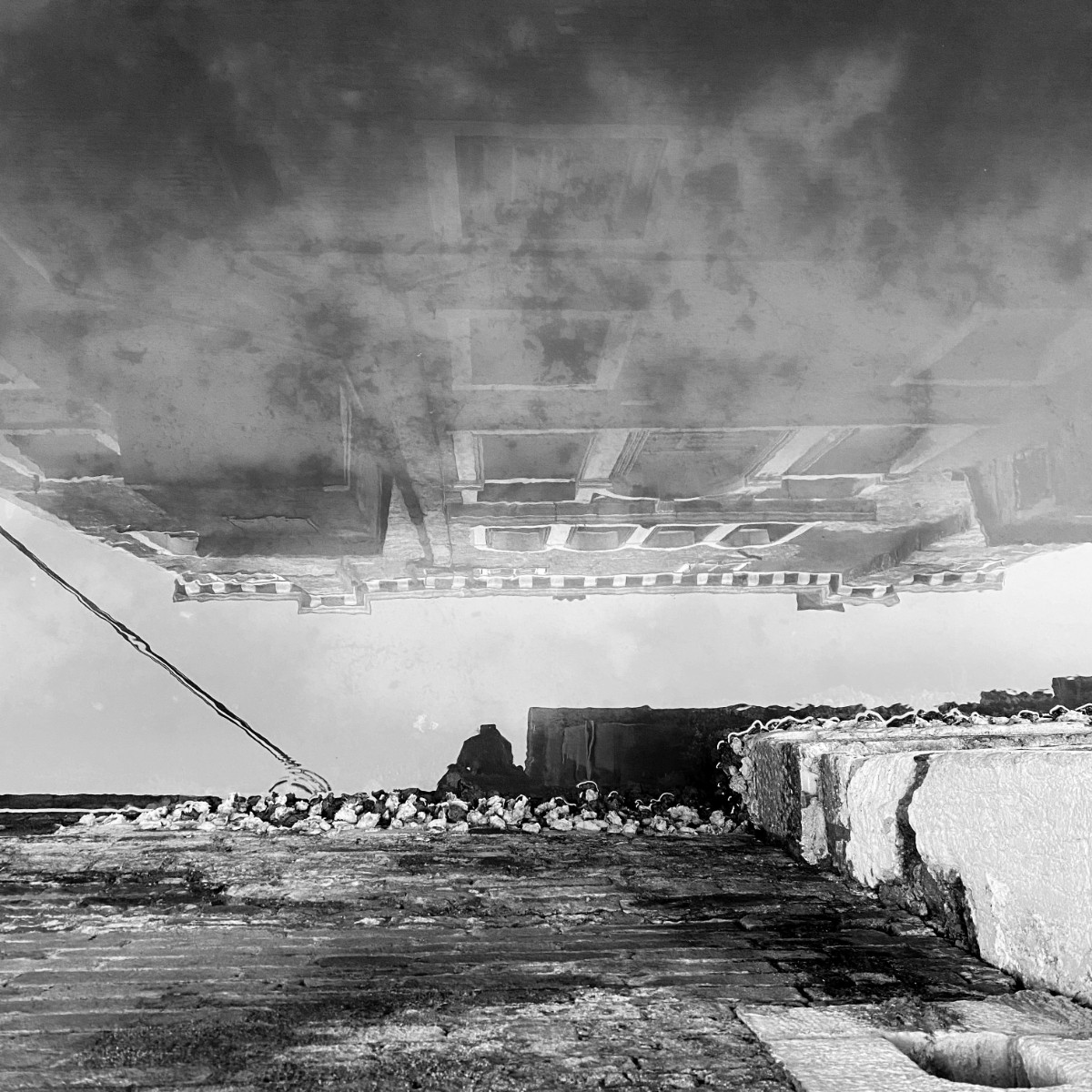
The WAVe workshop “Balance in between Time and Space” is conceived as an interdisciplinary research space dedicated to the exploration of the critical relationship between permanence and transformation, memory and design, time and space. Within the WAVe programmes of Università Iuav di Venezia, the workshop proposes an investigation into the narrative, design, and speculative possibilities emerging from the intersection of architecture, restoration, urbanism, environmental infrastructures, and contemporary landscape cultures.
The concept of “Balance” is understood as a dynamic and unstable condition, capable of questioning the devices through which cities and cultural heritage transform, preserve traces, generate conflicts, and produce new forms of design. Within this framework, the workshop addresses the memory of places not as a static archive, but as living matter, open to reinterpretation, reuse, and critical reworking processes.
Through theoretical contributions, seminar lectures, and workshop activities, students will be guided in the construction of a narrative device capable of relating matter, time, and space through languages and tools consistent with their educational background. The workshop encourages hybrid expressive modes — from drawing to writing, from audiovisual representation to spatial modelling, and including speculative and performative practices — as tools for investigating contemporary design.
Among the invited guests, Alvise Sforza Tarabochia (University of Kent) will deliver the lecture “Madness troubles borders. Externalising and containing madness”, dedicated to the cultural and spatial devices through which society defines, separates, and contains marginality and deviation. Caterina Giannattasio (University of Cagliari) will present “Point of Balance. Reuse scenarios for heterotopias of deviation”, a reflection on the reuse and transformation of heterotopic and marginal spaces as a design opportunity for new forms of urban and social equilibrium.
Along this line, a seminar will also be organised on the theme of the recovery and reuse of abandoned cemetery spaces, exploring the relationship between their material condition and their transformative potential, as well as the prefiguration of use practices capable of linking different temporalities: memory, everyday life, and the future.
The workshop will also host contributions from Celia Ghyka (Ion Mincu University of Architecture and Urbanism), Natasa Ćuković Ignjatović (University of Belgrade), Antonella Di Trani (École nationale supérieure d’architecture de Paris-Val de Seine, ENSAPVS), Tomasz Dudek and Theodor Reinhardt (TU Delft), Pedro Gomes and Jennifer Buyck (Université Gustave Eiffel), and Alexandra Paio (Instituto Universitário de Lisboa), who will contribute to the international debate through approaches related to design research, representation, urban ecologies, and digital practices.
The workshop, lasting two weeks (6–17 July), awards 6 CFU, is open to Master’s students, and will be held in English through lectures, seminars, collective reviews, and a final exhibition of the outcomes.
Program
Monday, July 06 2026
10:00 – 13:00 / 14:00 – 17:00
Introduction
Tuesday, July 07 2026
10:00 – 13:00 / 14:00 – 17:00
11:00
Point of Balance. Reuse Scenarios for Heterotopias of Deviation
Caterina Giannattasio, Università di Cagliari
Wednesday, July 08 2026
10:00 – 13:00 / 14:00 – 17:00
Atelier
Thursday, July 09 2026
10:00 – 13:00
11:00
Conflictual Landscapes of Memory
Celya Ghyka, Ion Mincu University, Bucharest
Friday, July 10 2026
10:00 – 13:00 / 14:00 – 17:00
Atelier
Monday, July 13 2026
10:00 – 13:00 / 14:00 – 17:00
11:00
Reconsidering Temporalities in Urban Transformations: an Anthropological Perspective
Antonella Di Trani, École Nationale Supérieure d’Architecture Paris-Val de Seine
14:00
Still on the Map!
Jennifer Buyck, Université Gustave Eiffel
15:00
Designing with Future, Research and Practice
Alexandra Paio, ISCTE-Instituto Universitário de Lisboa
Tuesday, July 14 2026
10:00 – 13:00 / 14:00 – 17:00
11:00
Time-Space-Pace-Place
Natasa Cukovic Ignjatovic, University of Belgrade
Wednesday, July 15 2026
10:00 – 13:00 / 14:00 – 17:00
11:00
Madness troubles borders. Externalising and Containing Madness
Alvise Sforza Tarabochia, University of Kent
14:00
Contaminated Ecologies: a Cartographic Exploration
Tomasz Dudek and Theodor Reinhardt, TU Delft
Thursday, July 16 2026
10:00 – 13:00 / 14:00 – 17:00
10:00
Places of Death, yet Full of Life: Reusing Abandoned Cemeteries
Matteo Basso, Chiara Semenzin
Tommaso Moretto, Gianluca Spironelli, Marco Tosato, Francesca Bertoncello
Università Iuav di Venezia, room J1
Roberta Albiero, Riccarda Cantarelli, Silvia Cattiodoro, Giovanni Mucelli
Balance in Motion. Forces Made Visible
9 – 17 July 2026
4 CFU (Type D)
With contributions from Leonardo Filesi, Bianca Mascellani
Lectures:
Leonardo Filesi, Living Forms and Natural Geometries: Balance, Growth, and Tension in the Plant World.
Bianca Mascellani, Structures in Equilibrium: From Statics to Tensegrity Experiments.
The workshop will be structured in the form of lectures and a practical-theoretical experimentation on the relationship between form and structure, understood as a dynamic field of relations between forces. Hands will constitute a fundamental tool for thinking and making in the production of drawings and models, through the learning of construction techniques using learning-by-doing methods, which will be designed in order to experiment with the relationship between form and structure.
External contributions will provide a broader and transdisciplinary perspective: from architecture to biology, from design to the human body, from statics to sculpture, where the idea of equilibrium is understood not as a static system, but rather as a continuous transition from one state of equilibrium to another.
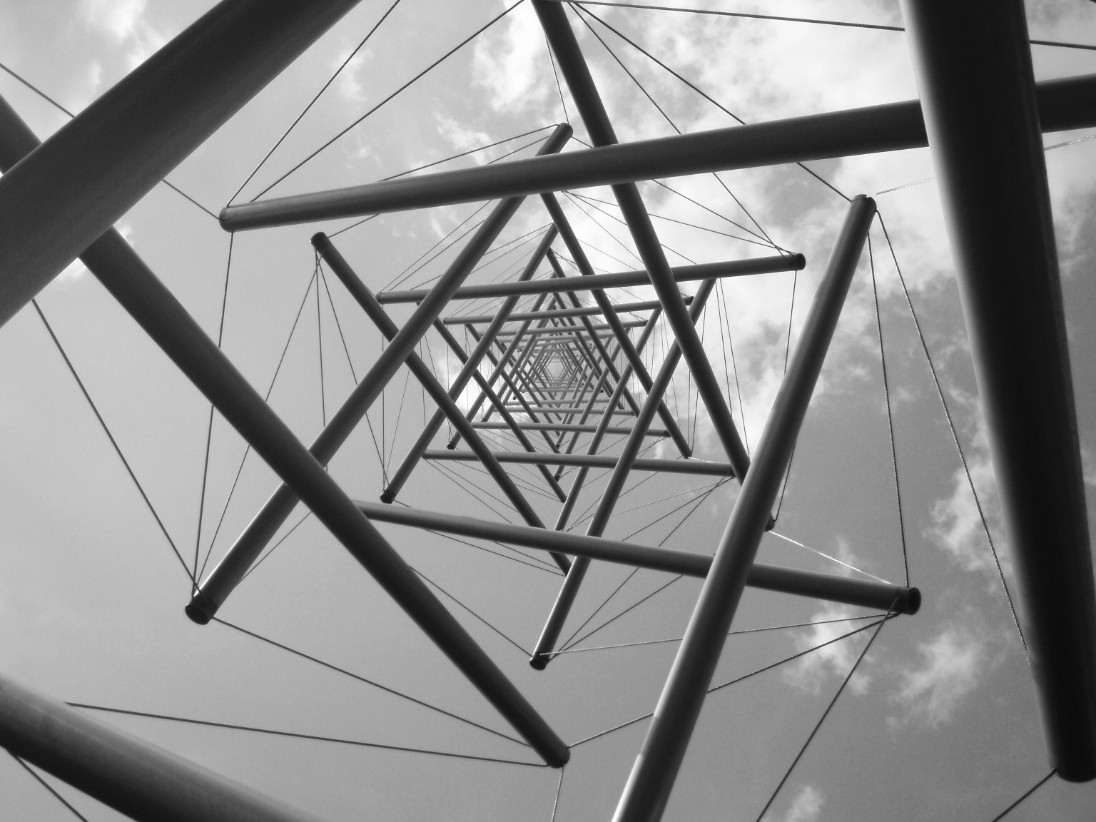
In particular, the concept of tensegrity (tensional integrity) will be explored: a structural principle based on the balance between rigid elements in compression and flexible elements in tension, giving rise to lightweight, stable and resilient structures. Coined by Buckminster Fuller, the term finds applications not only in architecture, but also in the worlds of art and body biomechanics. “Islands of tension in an ocean of compression” [1] is the expression used by Buckminster Fuller to synthesise the dynamic balance of the opposing forces at play.
The balance between weight, thrust and tension, a foundation of architecture since its origins, reveals a constructive wisdom capable of transforming form/structure into a dynamic, stable and durable organism.
In the field of art, reference will be made to the experiments of Alexander Calder, Bruno Munari and, in particular, to the work of Kenneth Snelson, as well as to biology and physiology in the natural world. In animals (and in other biological cellular structures), which owe much of their strength to the tension and compression of their constituent parts, muscles, tendons and bones generate a resistant tensional system in equilibrium and capable of controlling movement.
The term tensegrity, which expresses the universal concept of the dynamic balance of opposing forces (in this case, abandonment and self-control), even finds a correspondence, according to the Peruvian-born American writer and anthropologist Carlos Castaneda, in the practice of the “magical passes”, an ancient dance practised by the women and men shamans of pre-Columbian Mexico. “If you want to achieve physical well-being and mental balance, you need a flexible body […] To advance into the unknown, one must adopt a courageous but not reckless attitude, in order to establish a kind of balance between audacity and prudence.”
The workshop will place a particular focus on storytelling as a means of sharing the experience undertaken. In parallel, an exhibition design project will be developed and realised, within which the models studied and produced by the students will find an appropriate setting, seeking a methodological and outcome-based correspondence with the proposed theme.
[1] B. F.’s metaphor is not scientifically recognized. Gomez Estrada G., Bungartz H. J., Mohrdieck C., “On Cylindrical Tensegrity Structures”, Max Planck Institute.
Andrea Maggiolo, Maria Vittoria Morina, Elena Paccagnella, Beatrice Scarparo
Università Iuav di Venezia, room K1
Armando Dal Fabbro, Antonella Gallo, Ildebrando Clemente, Andrea Iorio, Giovanni Marras, Mauro Marzo, Gundula Rakowitz
Building New Equilibria. Water Artefacts Between Permanence and Transformation
9 – 16 July 2026
Exhibition on 17 July
4 CFU (Type D)
With contributions from Claudia Cavallo, Vincenzo D’Abramo, Giulia Conti, Claretta Mazzonetto, Giacomo Calandra Di Roccolino, Alessandro Virgilio Mosetti
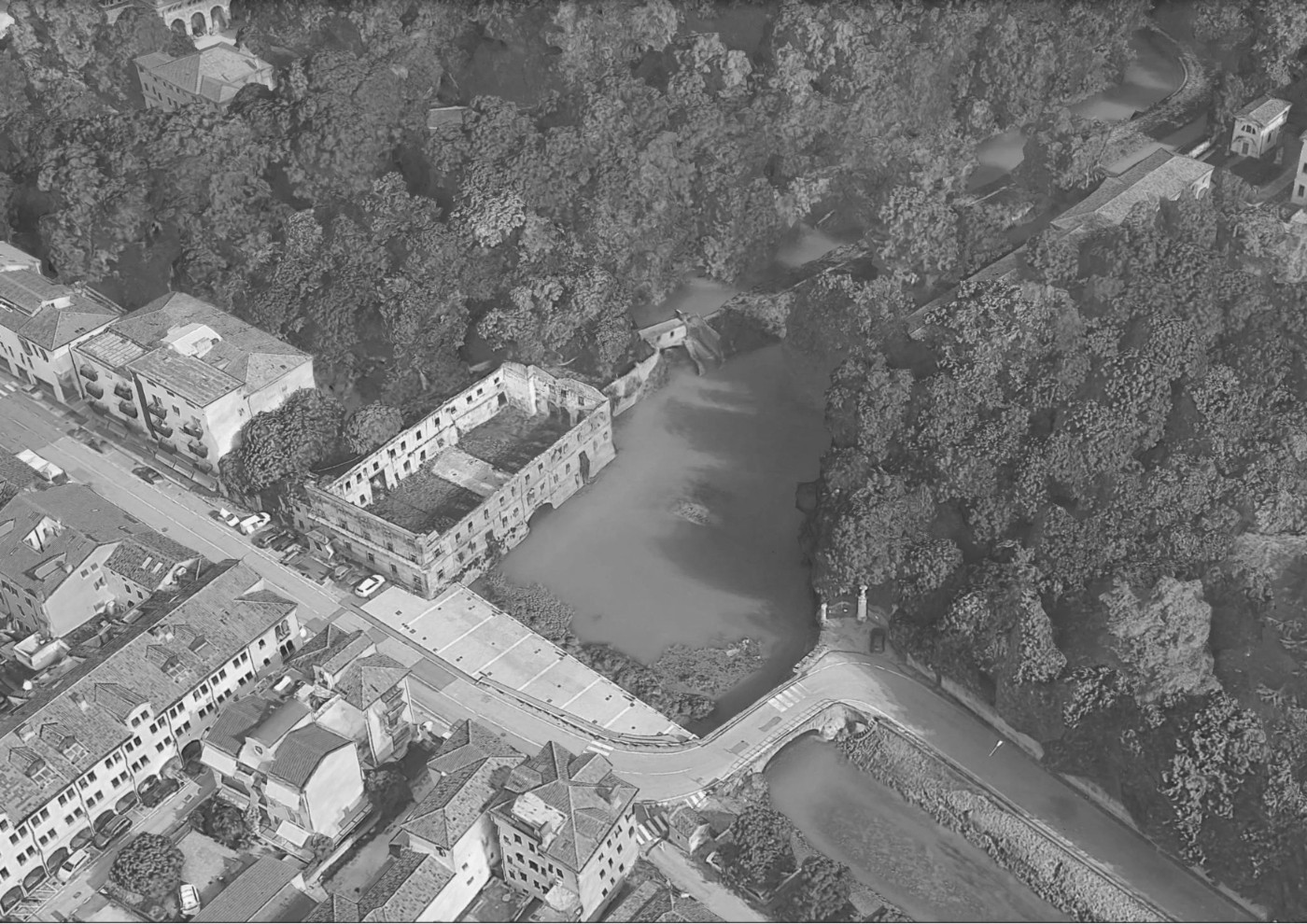
The workshop takes the Molino di Sotto in Mirano as an opportunity to reflect on adaptive reuse projects within the territory of the Venetian mainland: a complex landscape in which land and inland waters are constantly intertwined, and where the infrastructural network connecting rural and urban settlements has historically produced structures for regulation, crossing, and work that are now often abandoned or underused.
The workshop will be led by a group of faculty members from the Doctoral Programme in Architectural Composition at Università Iuav di Venezia, with the involvement of tutors and PhD candidates. For students, the Molino di Sotto will provide an opportunity to engage with a real design challenge, in which the educational experience is intertwined with the observation of places, the interpretation of existing conditions, and compositional experimentation.
The Molino will be considered not as an isolated object, but as a node within a broader system of relationships involving productive memory, masonry structure, internal void, waterways, riverbanks, pedestrian paths, and surrounding public spaces. From this perspective, reuse will not be understood as the simple attribution of new functions, nor as a neutral adaptation of the existing building, but rather as a compositional operation capable of constructing measures, thresholds, and transitions between what remains and what can be reactivated.
The design strategies will have to engage with the character of the building, its material consistency, the memory of labour, and the possibility of restoring a new form of public inhabitation to the complex. Particular attention will be paid to the conservation and consolidation of the masonry structure; the reinterpretation of the large internal void as a guiding space for public, cultural, or educational functions; integration with the waterscape; and the definition of recognisable interventions that establish a meaningful relationship with the existing structure.
The workshop will therefore address the concept of balance not as a weak compromise, but as a design condition: an unstable yet productive balance in which the new intervention must reconcile respect for the existing building, clarity of transformation, productive memory, the water system, and openness to new collective uses.
For interested students enrolled in the Master’s Degree Programme in Architecture, the experience may also constitute an initial approach to a possible thesis design studio dedicated to the Molino di Sotto, conceived as a space for further investigation and development of the issues that emerge during the workshop.
Francesca Bianchi, Matteo Isacco
Università Iuav di Venezia, room P
Luca Casarotto, Pietro Costa, Studio Pupilla (Francesca Biagiotti, Francesca Pellicciari), Marco Zito
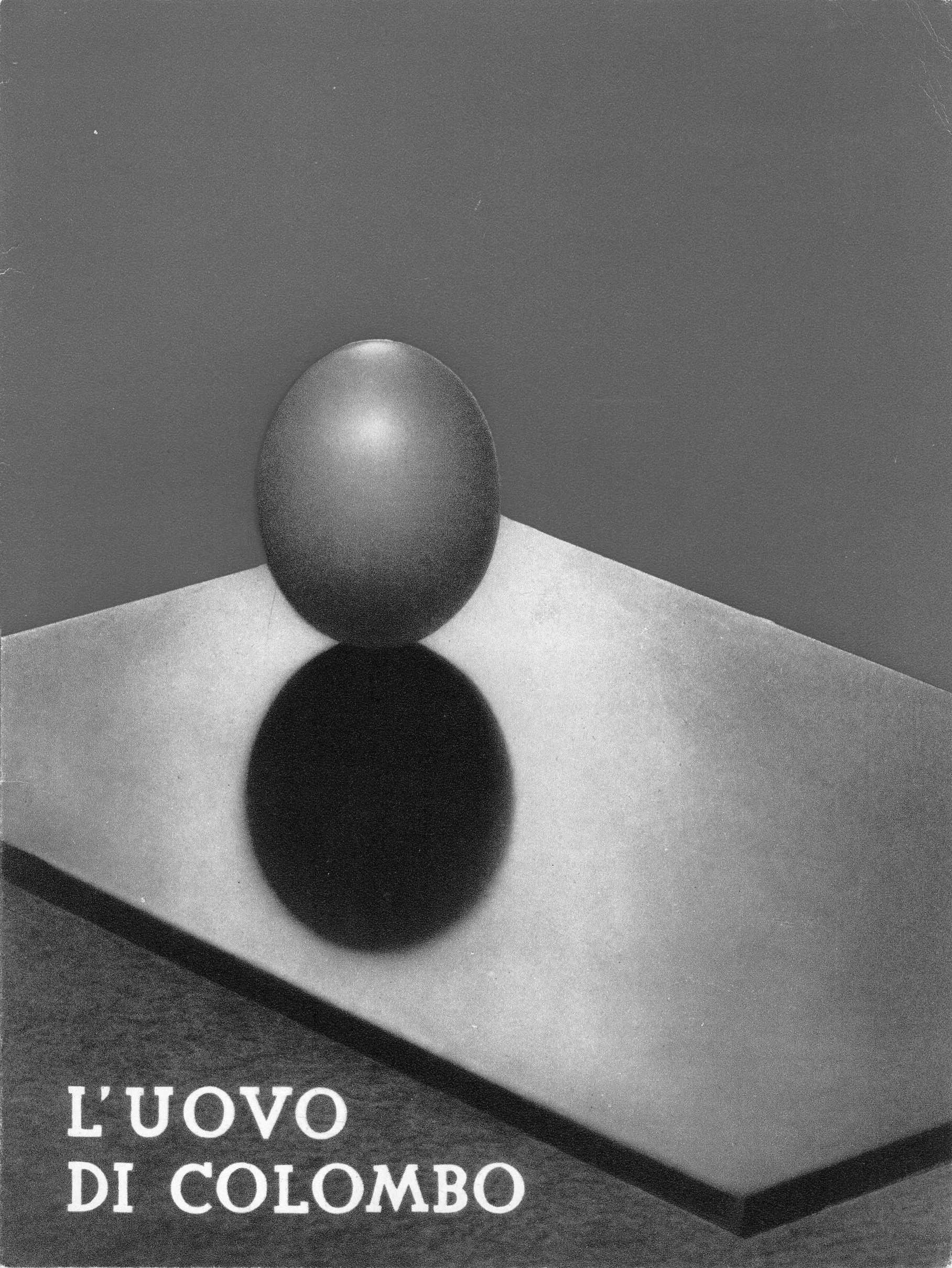
Complexity Is a Simple Problem. Designing the Identity of a National Pavilion at the Venice Biennale
10 – 17 July 2026
4 CFU (Type D / F)
The workshop is framed within the overall theme of WAVe 2026, Balance, investigating the relationship between different languages, materials, devices, and design contexts, and the ways in which these can achieve equilibrium within a coherent and recognisable system.
Starting from a specific curatorial theme within the context of a national pavilion at the Venice Biennale, the workshop invites students to develop an articulated design experience capable of operating across different media and scales: from exhibition spaces to objects, from communication strategies to editorial and promotional materials, from informational devices to artefacts intended for use and engagement with the public.
The workshop encourages reflection on the balance between heterogeneous components, each characterised by its own function, materiality, and mode of use. Students will be guided in the development of a concept and its translation into a coordinated set of design elements, working on the relationships between forms, materials, texts, images, objects, and interactions.
The aim of the workshop is to provide students with a concrete design experience, closely connected to the dynamics of a major international cultural event, while exploring how coherent relationships can be established between different contexts, languages, and audiences.
Lucrezia Teghil
Program
Colophon
Università Iuav di Venezia
WAVe 2026
Balance. Different Types
of Equilibrium
Other Degree Courses
6 – 17 July 2026
Scientific Coordinators Workshop di Architettura Venezia
Michel Carlana
Simone Gobbo
Coordination of Other Degree Courses
Maria Teresa Sambin
With
Roberta Albiero, Matteo Basso, Francesca Biagiotti, Riccarda Cantarelli, Luca Casarotto, Monica Centanni, Pietro Costa, Armando Dal Fabbro, Mario Farina, Antonella Gallo, Andrea Iorio, Filippo Magni, Giovanni Marras, Mauro Marzo, Francesca Pellicciari, Gundula Rakowitz, Maria Teresa Sambin, Emanuela Sorbo, Stefano Tomassini, Luca Velo, Marco Zito
Staff
Davide Baggio, Anna Mocellini, Silvia Narducci, Alice Rampazzo
Administrative Staff
Lucia Basile, Federico Ferruzzi, Maria Gatto
Visual Identity
Lorenzo Mason Studio
Collaborations
Servizio fotografico e immagini Iuav
Laboratorio strumentale per la didattica Iuav
With the Support of
Fondazione Iuav
Contact
wave2026@iuav.it
Instagram
iuav_wave